
RUST : 14. More About Cargo and Crates.io
More About Cargo and Crates.io
So far we’ve used only the most basic features of Cargo to build, run, and test our code, but it can do a lot more. In this chapter, we’ll discuss some of its other, more advanced features to show you how to do the following:
- Customize your build through release profiles
- Publish libraries on crates.io
- Organize large projects with workspaces
- Install binaries from crates.io
- Extend Cargo using custom commands
Cargo can do even more than what we cover in this chapter, so for a full explanation of all its features, see its documentation.
Customizing Builds with Release Profiles
In Rust, release profiles are predefined and customizable profiles with different configurations that allow a programmer to have more control over various options for compiling code. Each profile is configured independently of the others.
Cargo has two main profiles: the dev profile Cargo uses when you run cargo build and the release profile Cargo uses when you run cargo build --release.
The dev profile is defined with good defaults for development, and the release profile has good defaults for release builds.
These profile names might be familiar from the output of your builds:
$ cargo build
    Finished dev [unoptimized + debuginfo] target(s) in 0.0 secs
$ cargo build --release
    Finished release [optimized] target(s) in 0.0 secs
The dev and release shown in this build output indicate that the compiler is using different profiles.
Cargo has default settings for each of the profiles that apply when there aren’t any [profile.*] sections in the project’s Cargo.toml file.
By adding [profile.*] sections for any profile you want to customize, you can override any subset of the default settings.
For example, here are the default values for the opt-level setting for the dev and release profiles:
// Filename: Cargo.toml

[profile.dev]
opt-level = 0

[profile.release]
opt-level = 3
The opt-level setting controls the number of optimizations Rust will apply to your code, with a range of 0 to 3.
Applying more optimizations extends compiling time, so if you’re in development and compiling your code often, you’ll want faster compiling even if the resulting code runs slower.
That is the reason the default opt-level for dev is 0.
When you’re ready to release your code, it’s best to spend more time compiling.
You’ll only compile in release mode once, but you’ll run the compiled program many times, so release mode trades longer compile time for code that runs faster.
That is why the default opt-level for the release profile is 3.
You can override any default setting by adding a different value for it in Cargo.toml. For example, if we want to use optimization level 1 in the development profile, we can add these two lines to our project’s Cargo.toml file:
// Filename: Cargo.toml

[profile.dev]
opt-level = 1
This code overrides the default setting of 0.
Now when we run cargo build, Cargo will use the defaults for the dev profile plus our customization to opt-level.
Because we set opt-level to 1, Cargo will apply more optimizations than the default, but not as many as in a release build.
For the full list of configuration options and defaults for each profile, see Cargo’s documentation.
Publishing a Crate to Crates.io
We’ve used packages from crates.io as dependencies of our project, but you can also share your code with other people by publishing your own packages. The crate registry at crates.io distributes the source code of your packages, so it primarily hosts code that is open source.
Rust and Cargo have features that help make your published package easier for people to use and to find in the first place. We’ll talk about some of these features next and then explain how to publish a package.
Making Useful Documentation Comments
Accurately documenting your packages will help other users know how and when to use them, so it’s worth investing the time to write documentation.
In Chapter 3, we discussed how to comment Rust code using two slashes, //.
Rust also has a particular kind of comment for documentation, known conveniently as a documentation comment, that will generate HTML documentation.
The HTML displays the contents of documentation comments for public API items intended for programmers interested in knowing how to use your crate as opposed to how your crate is implemented.
Documentation comments use three slashes, ///, instead of two and support Markdown notation for formatting the text.
Place documentation comments just before the item they’re documenting.
Listing 14-1 shows documentation comments for an add_one function in a crate named my_crate:
//Filename: src/lib.rs

/// Adds one to the number given.
///
/// # Examples
///
/// ```
/// let arg = 5;
/// let answer = my_crate::add_one(arg);
///
/// assert_eq!(6, answer);
/// ```
pub fn add_one(x: i32) -> i32 {
    x + 1
}
Listing 14-1: A documentation comment for a function
Here, we give a description of what the add_one function does, start a section with the heading Examples, and then provide code that demonstrates how to use the add_one function.
We can generate the HTML documentation from this documentation comment by running cargo doc.
This command runs the rustdoc tool distributed with Rust and puts the generated HTML documentation in the target/doc directory.
For convenience, running cargo doc --open will build the HTML for your current crate’s documentation (as well as the documentation for all of your crate’s dependencies) and open the result in a web browser.
Navigate to the add_one function and you’ll see how the text in the documentation comments is rendered, as shown in Figure 14-1:
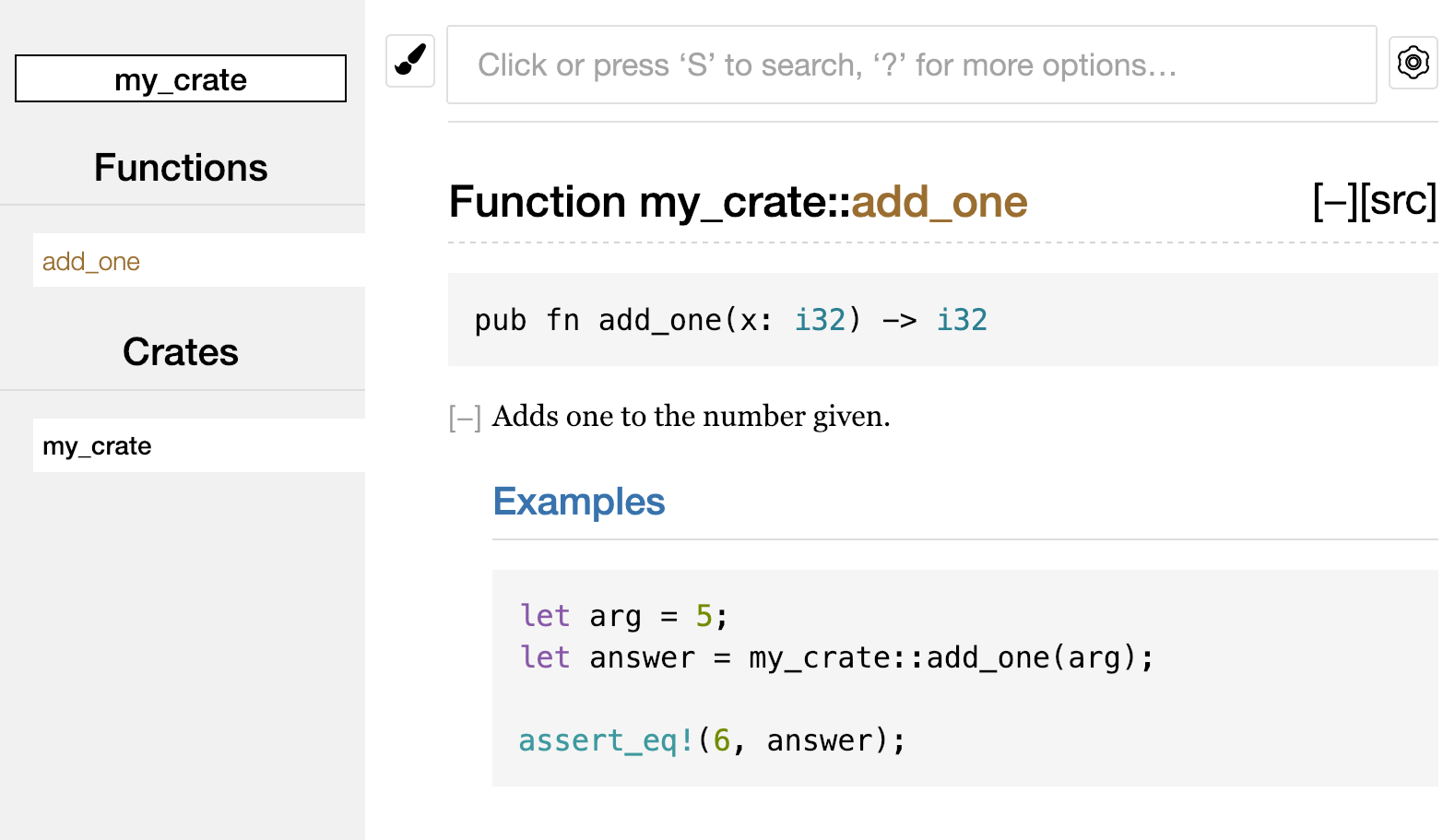
Figure 14-1: HTML documentation for the add_one function
Commonly Used Sections
We used the # Examples Markdown heading in Listing 14-1 to create a section in the HTML with the title “Examples.”
Here are some other sections that crate authors commonly use in their documentation:
- Panics: The scenarios in which the function being documented could panic. Callers of the function who don’t want their programs to panic should make sure they don’t call the function in these situations.
- Errors: If the function returns a
Result, describing the kinds of errors that might occur and what conditions might cause those errors to be returned can be helpful to callers so they can write code to handle the different kinds of errors in different ways. - Safety: If the function is
unsafeto call (we discuss unsafety in Chapter 19), there should be a section explaining why the function is unsafe and covering the invariants that the function expects callers to uphold.
Most documentation comments don’t need all of these sections, but this is a good checklist to remind you of the aspects of your code that people calling your code will be interested in knowing about.
Documentation Comments as Tests
Adding example code blocks in your documentation comments can help demonstrate how to use your library, and doing so has an additional bonus: running cargo test will run the code examples in your documentation as tests! Nothing is better than documentation with examples.
But nothing is worse than examples that don’t work because the code has changed since the documentation was written.
If we run cargo test with the documentation for the add_one function from Listing 14-1, we will see a section in the test results like this:
   Doc-tests my_crate

running 1 test
test src/lib.rs - add_one (line 5) ... ok

test result: ok. 1 passed; 0 failed; 0 ignored; 0 measured; 0 filtered out
Now if we change either the function or the example so the assert_eq! in the example panics and run cargo test again, we’ll see that the doc tests catch that the example and the code are out of sync with each other!
Commenting Contained Items
Another style of doc comment, //!, adds documentation to the item that contains the comments rather than adding documentation to the items following the comments.
We typically use these doc comments inside the crate root file (src/lib.rs by convention) or inside a module to document the crate or the module as a whole.
For example, if we want to add documentation that describes the purpose of the my_crate crate that contains the add_one function, we can add documentation comments that start with //! to the beginning of the src/lib.rs file, as shown in Listing 14-2:
// Filename: src/lib.rs

//! # My Crate
//!
//! `my_crate` is a collection of utilities to make performing certain
//! calculations more convenient.

/// Adds one to the number given.
// --snip--
Listing 14-2: Documentation for the my_crate crate as a whole
Notice there isn’t any code after the last line that begins with //!.
Because we started the comments with //! instead of ///, we’re documenting the item that contains this comment rather than an item that follows this comment.
In this case, the item that contains this comment is the src/lib.rs file, which is the crate root. These comments describe the entire crate.
When we run cargo doc --open, these comments will display on the front page of the documentation for my_crate above the list of public items in the crate, as shown in Figure 14-2:
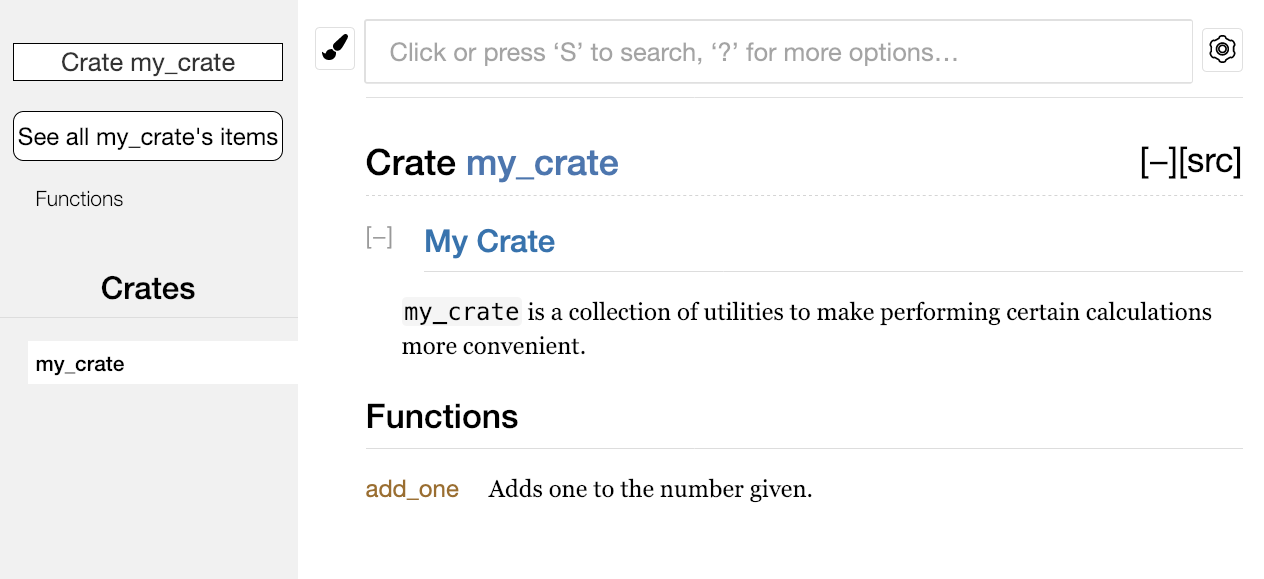
Figure 14-2: Rendered documentation for my_crate, including the comment describing the crate as a whole
Documentation comments within items are useful for describing crates and modules especially. Use them to explain the overall purpose of the container to help your users understand the crate’s organization.
Exporting a Convenient Public API with pub use
In Chapter 7, we covered how to organize our code into modules using the mod keyword, how to make items public using the pub keyword, and how to bring items into a scope with the use keyword.
However, the structure that makes sense to you while you’re developing a crate might not be very convenient for your users.
You might want to organize your structs in a hierarchy containing multiple levels, but then people who want to use a type you’ve defined deep in the hierarchy might have trouble finding out that type exists.
They might also be annoyed at having to enter use my_crate::some_module::another_module::UsefulType; rather than use my_crate::UsefulType;.
The structure of your public API is a major consideration when publishing a crate. People who use your crate are less familiar with the structure than you are and might have difficulty finding the pieces they want to use if your crate has a large module hierarchy.
The good news is that if the structure isn’t convenient for others to use from another library, you don’t have to rearrange your internal organization: instead, you can re-export items to make a public structure that’s different from your private structure by using pub use.
Re-exporting takes a public item in one location and makes it public in another location, as if it were defined in the other location instead.
For example, say we made a library named art for modeling artistic concepts.
Within this library are two modules: a kinds module containing two enums named PrimaryColor and SecondaryColor and a utils module containing a function named mix, as shown in Listing 14-3:
// Filename: src/lib.rs

//! # Art
//!
//! A library for modeling artistic concepts.

pub mod kinds {
    /// The primary colors according to the RYB color model.
    pub enum PrimaryColor {
        Red,
        Yellow,
        Blue,
    }

    /// The secondary colors according to the RYB color model.
    pub enum SecondaryColor {
        Orange,
        Green,
        Purple,
    }
}

pub mod utils {
    use crate::kinds::*;

    /// Combines two primary colors in equal amounts to create
    /// a secondary color.
    pub fn mix(c1: PrimaryColor, c2: PrimaryColor) -> SecondaryColor {
        // --snip--
        SecondaryColor::Orange
    }
}
fn main() {}
Listing 14-3: An art library with items organized into kinds and utils modules
Figure 14-3 shows what the front page of the documentation for this crate generated by cargo doc would look like:
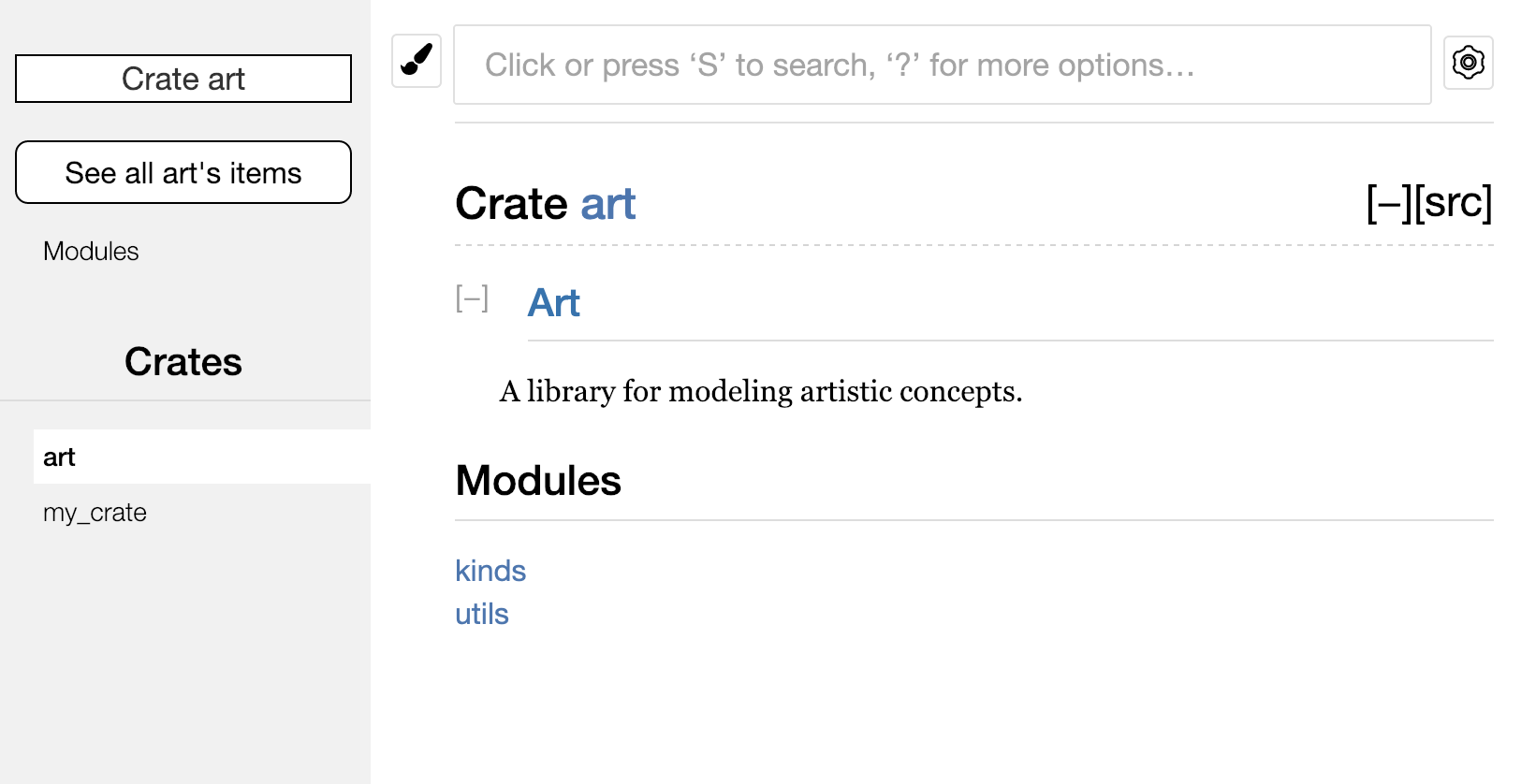
Figure 14-3: Front page of the documentation for art that lists the kinds and utils modules
Note that the PrimaryColor and SecondaryColor types aren’t listed on the front page, nor is the mix function. We have to click kinds and utils to see them.
Another crate that depends on this library would need use statements that bring the items from art into scope, specifying the module structure that’s currently defined.
Listing 14-4 shows an example of a crate that uses the PrimaryColor and mix items from the art crate:
// Filename: src/main.rs

use art::kinds::PrimaryColor;
use art::utils::mix;

fn main() {
    let red = PrimaryColor::Red;
    let yellow = PrimaryColor::Yellow;
    mix(red, yellow);
}
Listing 14-4: A crate using the art crate’s items with its internal structure exported
The author of the code in Listing 14-4, which uses the art crate, had to figure out that PrimaryColor is in the kinds module and mix is in the utils module.
The module structure of the art crate is more relevant to developers working on the art crate than to developers using the art crate.
The internal structure that organizes parts of the crate into the kinds module and the utils module doesn’t contain any useful information for someone trying to understand how to use the art crate.
Instead, the art crate’s module structure causes confusion because developers have to figure out where to look, and the structure is inconvenient because developers must specify the module names in the use statements.
To remove the internal organization from the public API, we can modify the art crate code in Listing 14-3 to add pub use statements to re-export the items at the top level, as shown in Listing 14-5:
// Filename: src/lib.rs

//! # Art
//!
//! A library for modeling artistic concepts.

pub use self::kinds::PrimaryColor;
pub use self::kinds::SecondaryColor;
pub use self::utils::mix;

pub mod kinds {
    // --snip--
}

pub mod utils {
    // --snip--
}
Listing 14-5: Adding pub use statements to re-export items
The API documentation that cargo doc generates for this crate will now list and link re-exports on the front page, as shown in Figure 14-4, making the PrimaryColor and SecondaryColor types and the mix function easier to find.
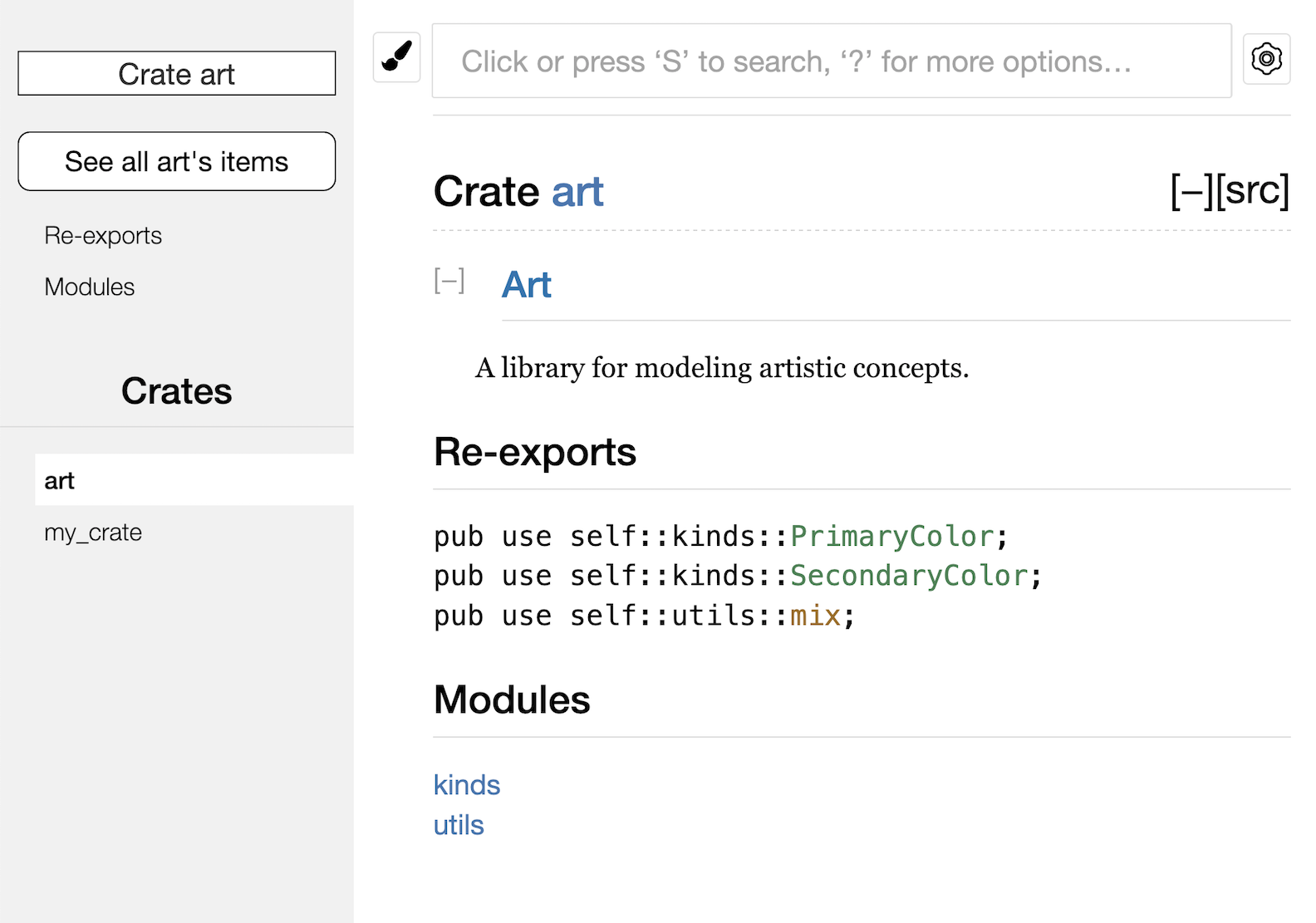
Figure 14-4: The front page of the documentation for art that lists the re-exports
The art crate users can still see and use the internal structure from Listing 14-3 as demonstrated in Listing 14-4, or they can use the more convenient structure in Listing 14-5, as shown in Listing 14-6:
//Filename: src/main.rs

use art::PrimaryColor;
use art::mix;

fn main() {
    // --snip--
}
Listing 14-6: A program using the re-exported items from the art crate
In cases where there are many nested modules, re-exporting the types at the top level with pub use can make a significant difference in the experience of people who use the crate.
Creating a useful public API structure is more of an art than a science, and you can iterate to find the API that works best for your users.
Choosing pub use gives you flexibility in how you structure your crate internally and decouples that internal structure from what you present to your users.
Look at some of the code of crates you’ve installed to see if their internal structure differs from their public API.
Setting Up a Crates.io Account
Before you can publish any crates, you need to create an account on crates.io and get an API token.
To do so, visit the home page at crates.io and log in via a GitHub account. (The GitHub account is currently a requirement, but the site might support other ways of creating an account in the future.)
Once you’re logged in, visit your account settings at https://crates.io/me/ and retrieve your API key. Then run the cargo login command with your API key, like this:
$ cargo login abcdefghijklmnopqrstuvwxyz012345
This command will inform Cargo of your API token and store it locally in ~/.cargo/credentials.
Note that this token is a secret: do not share it with anyone else.
If you do share it with anyone for any reason, you should revoke it and generate a new token on crates.io.
Adding Metadata to a New Crate
Now that you have an account, let’s say you have a crate you want to publish.
Before publishing, you’ll need to add some metadata to your crate by adding it to the [package] section of the crate’s Cargo.toml file.
Your crate will need a unique name.
While you’re working on a crate locally, you can name a crate whatever you’d like.
However, crate names on crates.io are allocated on a first-come, first-served basis.
Once a crate name is taken, no one else can publish a crate with that name.
Before attempting to publish a crate, search for the name you want to use on the site.
If the name has been used by another crate, you will need to find another name and edit the name field in the Cargo.toml file under the [package] section to use the new name for publishing, like so:
// Filename: Cargo.toml

[package]
name = "guessing_game"
Even if you’ve chosen a unique name, when you run cargo publish to publish the crate at this point, you’ll get a warning and then an error:
$ cargo publish
    Updating registry `https://github.com/rust-lang/crates.io-index`
warning: manifest has no description, license, license-file, documentation,
homepage or repository.
--snip--
error: api errors: missing or empty metadata fields: description, license.
The reason is that you’re missing some crucial information: a description and license are required so people will know what your crate does and under what terms they can use it. To rectify this error, you need to include this information in the Cargo.toml file.
Add a description that is just a sentence or two, because it will appear with your crate in search results.
For the license field, you need to give a license identifier value.
The Linux Foundation’s Software Package Data Exchange (SPDX) lists the identifiers you can use for this value. For example, to specify that you’ve licensed your crate using the MIT License, add the MIT identifier:
// Filename: Cargo.toml

[package]
name = "guessing_game"
license = "MIT"
If you want to use a license that doesn’t appear in the SPDX, you need to place the text of that license in a file, include the file in your project, and then use license-file to specify the name of that file instead of using the license key.
Guidance on which license is appropriate for your project is beyond the scope of this book. Many people in the Rust community license their projects in the same way as Rust by using a dual license of MIT OR Apache-2.0. This practice demonstrates that you can also specify multiple license identifiers separated by OR to have multiple licenses for your project.
With a unique name, the version, the author details that cargo new added when you created the crate, your description, and a license added, the Cargo.toml file for a project that is ready to publish might look like this:
// Filename: Cargo.toml

[package]
name = "guessing_game"
version = "0.1.0"
authors = ["Your Name <you@example.com>"]
edition = "2018"
description = "A fun game where you guess what number the computer has chosen."
license = "MIT OR Apache-2.0"

[dependencies]
Cargo’s documentation describes other metadata you can specify to ensure others can discover and use your crate more easily.
Publishing to Crates.io
Now that you’ve created an account, saved your API token, chosen a name for your crate, and specified the required metadata, you’re ready to publish! Publishing a crate uploads a specific version to crates.io for others to use.
Be careful when publishing a crate because a publish is permanent. The version can never be overwritten, and the code cannot be deleted. One major goal of crates.io is to act as a permanent archive of code so that builds of all projects that depend on crates from crates.io will continue to work. Allowing version deletions would make fulfilling that goal impossible. However, there is no limit to the number of crate versions you can publish.
Run the cargo publish command again. It should succeed now:
$ cargo publish
 Updating registry `https://github.com/rust-lang/crates.io-index`
Packaging guessing_game v0.1.0 (file:///projects/guessing_game)
Verifying guessing_game v0.1.0 (file:///projects/guessing_game)
Compiling guessing_game v0.1.0
(file:///projects/guessing_game/target/package/guessing_game-0.1.0)
 Finished dev [unoptimized + debuginfo] target(s) in 0.19 secs
Uploading guessing_game v0.1.0 (file:///projects/guessing_game)
Congratulations! You’ve now shared your code with the Rust community, and anyone can easily add your crate as a dependency of their project.
Publishing a New Version of an Existing Crate
When you’ve made changes to your crate and are ready to release a new version, you change the version value specified in your Cargo.toml file and republish.
Use the Semantic Versioning rules to decide what an appropriate next version number is based on the kinds of changes you’ve made.
Then run cargo publish to upload the new version.
Removing Versions from Crates.io with cargo yank
Although you can’t remove previous versions of a crate, you can prevent any future projects from adding them as a new dependency. This is useful when a crate version is broken for one reason or another. In such situations, Cargo supports yanking a crate version.
Yanking a version prevents new projects from starting to depend on that version while allowing all existing projects that depend on it to continue to download and depend on that version. Essentially, a yank means that all projects with a Cargo.lock will not break, and any future Cargo.lock files generated will not use the yanked version.
To yank a version of a crate, run cargo yank and specify which version you want to yank:
$ cargo yank --vers 1.0.1
By adding --undo to the command, you can also undo a yank and allow projects to start depending on a version again:
$ cargo yank --vers 1.0.1 --undo
A yank does not delete any code. For example, the yank feature is not intended for deleting accidentally uploaded secrets. If that happens, you must reset those secrets immediately.
Cargo Workspaces
In Chapter 12, we built a package that included a binary crate and a library crate. As your project develops, you might find that the library crate continues to get bigger and you want to split up your package further into multiple library crates. In this situation, Cargo offers a feature called workspaces that can help manage multiple related packages that are developed in tandem.
Creating a Workspace
A workspace is a set of packages that share the same Cargo.lock and output directory. Let’s make a project using a workspace—we’ll use trivial code so we can concentrate on the structure of the workspace.
There are multiple ways to structure a workspace;
we’re going to show one common way. We’ll have a workspace containing a binary and two libraries.
The binary, which will provide the main functionality, will depend on the two libraries.
One library will provide an add_one function, and a second library an add_two function.
These three crates will be part of the same workspace.
We’ll start by creating a new directory for the workspace:
$ mkdir add
$ cd add
Next, in the add directory, we create the Cargo.toml file that will configure the entire workspace.
This file won’t have a [package] section or the metadata we’ve seen in other Cargo.toml files.
Instead, it will start with a [workspace] section that will allow us to add members to the workspace by specifying the path to our binary crate; in this case, that path is adder:
// Filename: Cargo.toml
[workspace]

members = [
    "adder",
]
Next, we’ll create the adder binary crate by running cargo new within the add directory:
$ cargo new adder
     Created binary (application) `adder` project
At this point, we can build the workspace by running cargo build.
The files in your add directory should look like this:
├── Cargo.lock
├── Cargo.toml
├── adder
│   ├── Cargo.toml
│   └── src
│       └── main.rs
└── target
The workspace has one target directory at the top level for the compiled artifacts to be placed into; the adder crate doesn’t have its own target directory.
Even if we were to run cargo build from inside the adder directory, the compiled artifacts would still end up in add/target rather than add/adder/target.
Cargo structures the target directory in a workspace like this because the crates in a workspace are meant to depend on each other.
If each crate had its own target directory, each crate would have to recompile each of the other crates in the workspace to have the artifacts in its own target directory.
By sharing one target directory, the crates can avoid unnecessary rebuilding.
Creating the Second Crate in the Workspace
Next, let’s create another member crate in the workspace and call it add-one.
Change the top-level Cargo.toml to specify the add-one path in the members list:
// Filename: Cargo.toml

[workspace]

members = [
    "adder",
    "add-one",
]
Then generate a new library crate named add-one:
$ cargo new add-one --lib
     Created library `add-one` project
Your add directory should now have these directories and files:
├── Cargo.lock
├── Cargo.toml
├── add-one
│   ├── Cargo.toml
│   └── src
│       └── lib.rs
├── adder
│   ├── Cargo.toml
│   └── src
│       └── main.rs
└── target
In the add-one/src/lib.rs file, let’s add an add_one function:
// Filename: add-one/src/lib.rs

fn main() {
pub fn add_one(x: i32) -> i32 {
    x + 1
}
Now that we have a library crate in the workspace, we can have the binary crate adder depend on the library crate add-one.
First, we’ll need to add a path dependency on add-one to adder/Cargo.toml.
// Filename: adder/Cargo.toml

[dependencies]

add-one = { path = "../add-one" }
Cargo doesn’t assume that crates in a workspace will depend on each other, so we need to be explicit about the dependency relationships between the crates.
Next, let’s use the add_one function from the add-one crate in the adder crate.
Open the adder/src/main.rs file and add a use line at the top to bring the new add-one library crate into scope.
Then change the main function to call the add_one function, as in Listing 14-7.
// Filename: adder/src/main.rs

extern crate add_one;

fn main() {
    let num = 10;
    println!("Hello, world! {} plus one is {}!", num, add_one::add_one(num));
}
Listing 14-7: Using the add-one library crate from the adder crate
Let’s build the workspace by running cargo build in the top-level add directory!
$ cargo build
   Compiling add-one v0.1.0 (file:///projects/add/add-one)
   Compiling adder v0.1.0 (file:///projects/add/adder)
    Finished dev [unoptimized + debuginfo] target(s) in 0.68 secs
To run the binary crate from the add directory, we need to specify which package in the workspace we want to use by using the -p argument and the package name with cargo run:
$ cargo run -p adder
    Finished dev [unoptimized + debuginfo] target(s) in 0.0 secs
     Running `target/debug/adder`
Hello, world! 10 plus one is 11!
This runs the code in adder/src/main.rs, which depends on the add-one crate.
Depending on an External Crate in a Workspace
Notice that the workspace has only one Cargo.lock file at the top level of the workspace rather than having a Cargo.lock in each crate’s directory.
This ensures that all crates are using the same version of all dependencies.
If we add the rand crate to the adder/Cargo.toml and add-one/Cargo.toml files, Cargo will resolve both of those to one version of rand and record that in the one Cargo.lock.
Making all crates in the workspace use the same dependencies means the crates in the workspace will always be compatible with each other.
Let’s add the rand crate to the [dependencies] section in the add-one/Cargo.toml file to be able to use the rand crate in the add-one crate:
// Filename: add-one/Cargo.toml

[dependencies]
rand = "0.5.5"
We can now add use rand; to the add-one/src/lib.rs file, and building the whole workspace by running cargo build in the add directory will bring in and compile the rand crate:
$ cargo build
    Updating crates.io index
  Downloaded rand v0.5.5
   --snip--
   Compiling rand v0.5.5
   Compiling add-one v0.1.0 (file:///projects/add/add-one)
   Compiling adder v0.1.0 (file:///projects/add/adder)
    Finished dev [unoptimized + debuginfo] target(s) in 10.18 secs
The top-level Cargo.lock now contains information about the dependency of add-one on rand.
However, even though rand is used somewhere in the workspace, we can’t use it in other crates in the workspace unless we add rand to their Cargo.toml files as well.
For example, if we add use rand; to the adder/src/main.rs file for the adder crate, we’ll get an error:
$ cargo build
   Compiling adder v0.1.0 (file:///projects/add/adder)
error: use of unstable library feature 'rand': use `rand` from crates.io (see
issue #27703)
 --> adder/src/main.rs:1:1
  |
1 | use rand;
To fix this, edit the Cargo.toml file for the adder crate and indicate that rand is a dependency for that crate as well.
Building the adder crate will add rand to the list of dependencies for adder in Cargo.lock, but no additional copies of rand will be downloaded.
Cargo has ensured that every crate in the workspace using the rand crate will be using the same version.
Using the same version of rand across the workspace saves space because we won’t have multiple copies and ensures that the crates in the workspace will be compatible with each other.
Adding a Test to a Workspace
For another enhancement, let’s add a test of the add_one::add_one function within the add_one crate:
// Filename: add-one/src/lib.rs

pub fn add_one(x: i32) -> i32 {
    x + 1
}

#[cfg(test)]
mod tests {
    use super::*;

    #[test]
    fn it_works() {
        assert_eq!(3, add_one(2));
    }
}
Now run cargo test in the top-level add directory:
$ cargo test
   Compiling add-one v0.1.0 (file:///projects/add/add-one)
   Compiling adder v0.1.0 (file:///projects/add/adder)
    Finished dev [unoptimized + debuginfo] target(s) in 0.27 secs
     Running target/debug/deps/add_one-f0253159197f7841

running 1 test
test tests::it_works ... ok

test result: ok. 1 passed; 0 failed; 0 ignored; 0 measured; 0 filtered out

     Running target/debug/deps/adder-f88af9d2cc175a5e

running 0 tests

test result: ok. 0 passed; 0 failed; 0 ignored; 0 measured; 0 filtered out

   Doc-tests add-one

running 0 tests

test result: ok. 0 passed; 0 failed; 0 ignored; 0 measured; 0 filtered out
The first section of the output shows that the it_works test in the add-one crate passed.
The next section shows that zero tests were found in the adder crate, and then the last section shows zero documentation tests were found in the add-one crate. Running cargo test in a workspace structured like this one will run the tests for all the crates in the workspace.
We can also run tests for one particular crate in a workspace from the top-level directory by using the -p flag and specifying the name of the crate we want to test:
$ cargo test -p add-one
    Finished dev [unoptimized + debuginfo] target(s) in 0.0 secs
     Running target/debug/deps/add_one-b3235fea9a156f74

running 1 test
test tests::it_works ... ok

test result: ok. 1 passed; 0 failed; 0 ignored; 0 measured; 0 filtered out

   Doc-tests add-one

running 0 tests

test result: ok. 0 passed; 0 failed; 0 ignored; 0 measured; 0 filtered out
This output shows cargo test only ran the tests for the add-one crate and didn’t run the adder crate tests.
If you publish the crates in the workspace to crates.io, each crate in the workspace will need to be published separately.
The cargo publish command does not have an --all flag or a -p flag, so you must change to each crate’s directory and run cargo publish on each crate in the workspace to publish the crates.
For additional practice, add an add-two crate to this workspace in a similar way as the add-one crate!
As your project grows, consider using a workspace: it’s easier to understand smaller, individual components than one big blob of code. Furthermore, keeping the crates in a workspace can make coordination between them easier if they are often changed at the same time.
Installing Binaries from Crates.io with cargo install
The cargo install command allows you to install and use binary crates locally.
This isn’t intended to replace system packages; it’s meant to be a convenient way for Rust developers to install tools that others have shared on crates.io.
Note that you can only install packages that have binary targets.
A binary target is the runnable program that is created if the crate has a src/main.rs file or another file specified as a binary, as opposed to a library target that isn’t runnable on its own but is suitable for including within other programs.
Usually, crates have information in the README file about whether a crate is a library, has a binary target, or both.
All binaries installed with cargo install are stored in the installation root’s bin folder.
If you installed Rust using rustup.rs and don’t have any custom configurations, this directory will be $HOME/.cargo/bin.
Ensure that directory is in your $PATH to be able to run programs you’ve installed with cargo install.
For example, in Chapter 12 we mentioned that there’s a Rust implementation of the grep tool called ripgrep for searching files.
If we want to install ripgrep, we can run the following:
$ cargo install ripgrep
Updating registry `https://github.com/rust-lang/crates.io-index`
 Downloading ripgrep v0.3.2
 --snip--
   Compiling ripgrep v0.3.2
    Finished release [optimized + debuginfo] target(s) in 97.91 secs
  Installing ~/.cargo/bin/rg
The last line of the output shows the location and the name of the installed binary, which in the case of ripgrep is rg. As long as the installation directory is in your $PATH, as mentioned previously, you can then run rg --help and start using a faster, rustier tool for searching files!
Extending Cargo with Custom Commands
Cargo is designed so you can extend it with new subcommands without having to modify Cargo.
If a binary in your $PATH is named cargo-something, you can run it as if it was a Cargo subcommand by running cargo something.
Custom commands like this are also listed when you run cargo --list.
Being able to use cargo install to install extensions and then run them just like the built-in Cargo tools is a super convenient benefit of Cargo’s design!
Summary
Sharing code with Cargo and crates.io is part of what makes the Rust ecosystem useful for many different tasks. Rust’s standard library is small and stable, but crates are easy to share, use, and improve on a timeline different from that of the language. Don’t be shy about sharing code that’s useful to you on crates.io; it’s likely that it will be useful to someone else as well!